
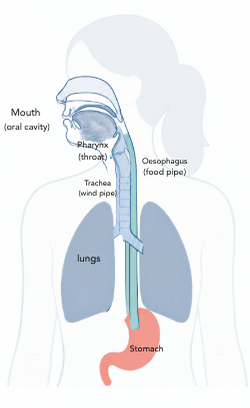
The majority of people have never really thought much about the swallow mechanism. A bit like breathing – it just…happens, right?
Actually, no! Although on average it lasts about 1 second, the swallow is a highly coordinated set of movements. In fact, it is one of the most complex functions of the human body.
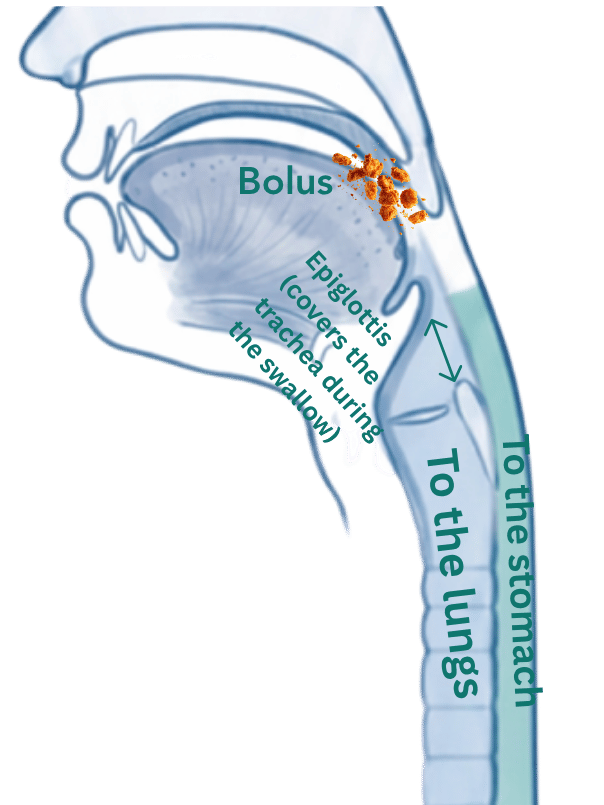
During a normal swallow, food and drink (the bolus) moves past the lips, through the mouth, into the throat (the pharynx) and on down into the food pipe (oesophagus).
The throat contains two tubes – the wind pipe (trachea) and the oesophagus. These tubes sit right beside each other and the swallow has to move each bolus into the oesophagus whilst still protecting the airway. As you can imagine, there are a lot of things that can go wrong.
What is dysphagia?
Dysphagia is the medical term for the breakdown of the normal swallow mechanism. It can happen at any age and is caused by a number of issues and conditions.
Dysphagia is not a condition by itself. It can be caused by Stroke, Neurological conditions e.g. Dementia, Parkinson’s Disease, Multiple Sclerosis, Motor Neurone Disease etc; Traumatic Brain Injury, and even simply by ageing.
What does it look like?
Dysphagia can have many signs and symptoms. It can look like one, some or all of the features listed below:
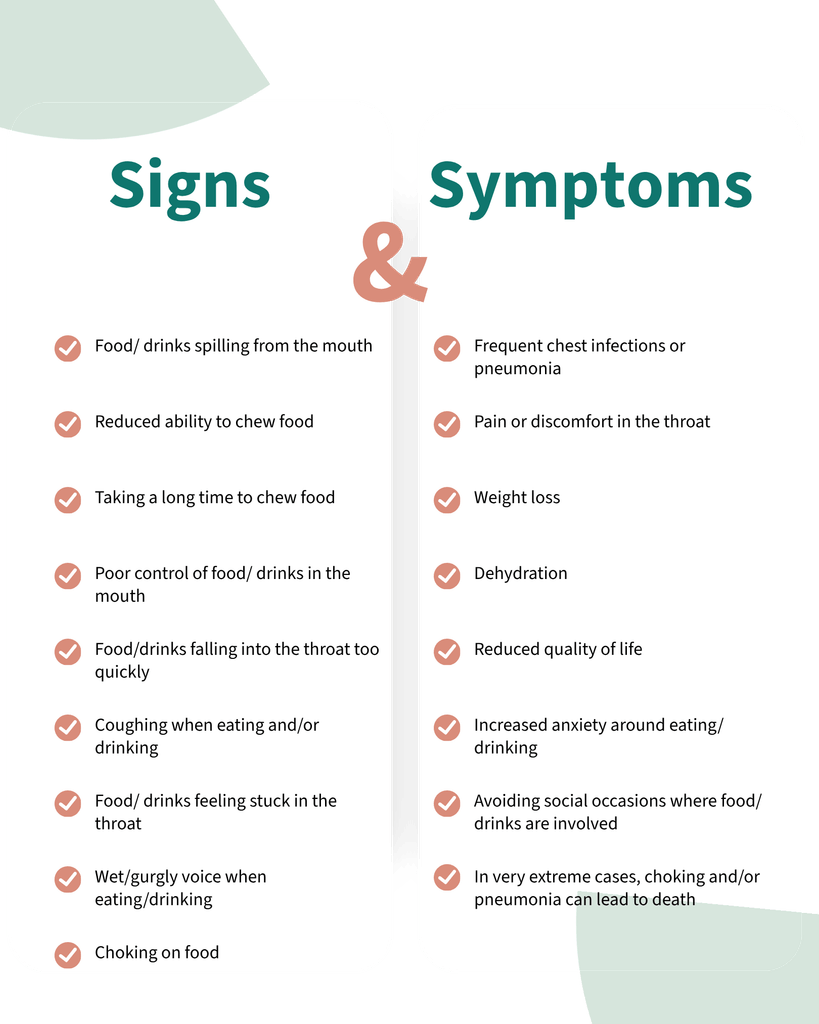
However, to make things confusing, dysphagia can also be present with no outward signs. This is called ‘silent aspiration’ and may present as unexplained chest infections.
How is dysphagia diagnosed?
Dysphagia is diagnosed by a trained Speech and Language Therapist (SLT). There are a number of ways an SLT can assess for the presence of dysphagia. In the community, the most common way dysphagia is assessed is by doing a clinical bedside examination (CSE). This involves an oromotor examination (looking at the movement of the cranial nerves in the face, the mouth and the throat), watching the person eat and drink different consistencies of food and fluids and looking out for the signs listed above. Sometimes, however, if there are no outward signs and silent aspiration is suspected, the SLT may refer for an X Ray of the swallow (videoflouroscopy) in Dublin. Most of the time, this will show exactly what is happening with the swallow and how to address any issues it shows up.

What next?
Once the assessment has been completed the SLT will explain their findings. If a dysphagia is identified, they will provide tips and strategies to reduce the risk of food and/or drinks going into the lungs, and they may also suggest some modified diet and/ or fluids.
What can I do?
If any of this sounds familiar, it may help to write down all the ways you notice swallowing has changed. If you are worried, have concerns or simply have some questions, click the link below and we can have a chat to see if a dysphagia assessment would help.